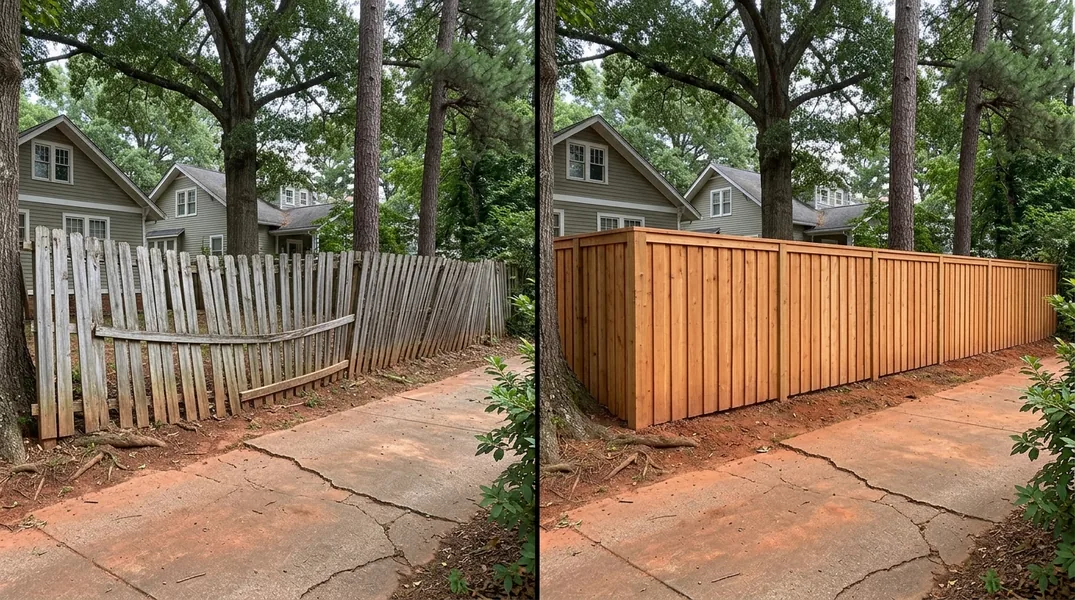
Fence Company in Raleigh, NC: Installation, Repair & Gates
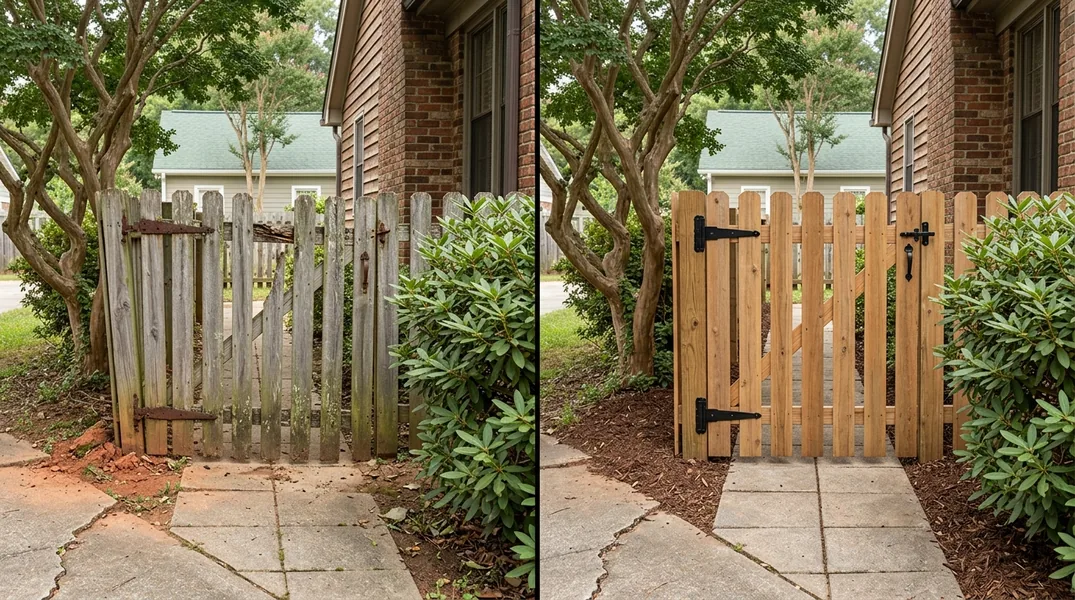
Homeowners searching for a fence company near me in Raleigh turn to Raleigh Fence Contractors because we are local, we know this soil and this housing stock, and the same crews who estimate your job are the ones who build it. We serve Raleigh, Cary, Durham, Apex, Wake Forest and the surrounding areas with new fence installation in wood and privacy fencing, vinyl and PVC, chain link, and aluminum and ornamental iron. We repair leaning fences, reset failed posts, rebuild storm damage, install and repair gates from manual swing gates to automatic driveway operators, install pool barriers to code, and handle fence removal and replacement when a fence has reached the end of its life.
Every fence in this region faces the same challenges: expansive red clay that swells and shrinks with the rain and drought cycles, long humid Piedmont summers that work on wood year-round, and summer thunderstorms that can bring down whole sections overnight. The subdivisions where we work most often have architectural standards that govern height and material, and every lot seems to be fenced. That means we are constantly reading fence lines, testing posts, and deciding whether a fence is worth repairing or has earned replacement. Call (919) 873-3812 to discuss what your fence needs, or request a free estimate and we will walk your property with you.
Why Fences Lean in Raleigh: Clay Soil and Rotted Posts
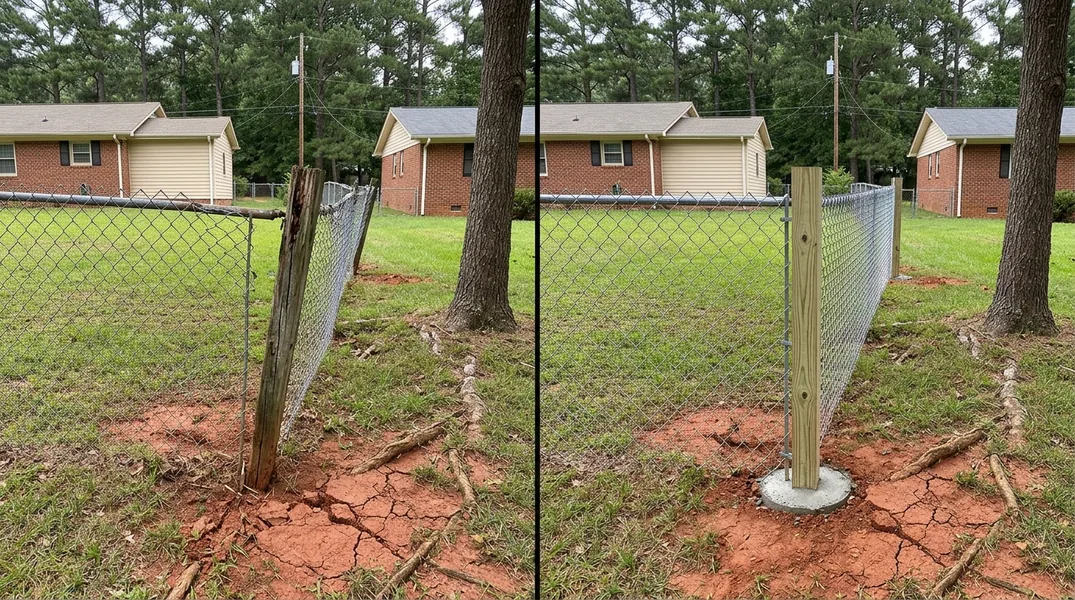
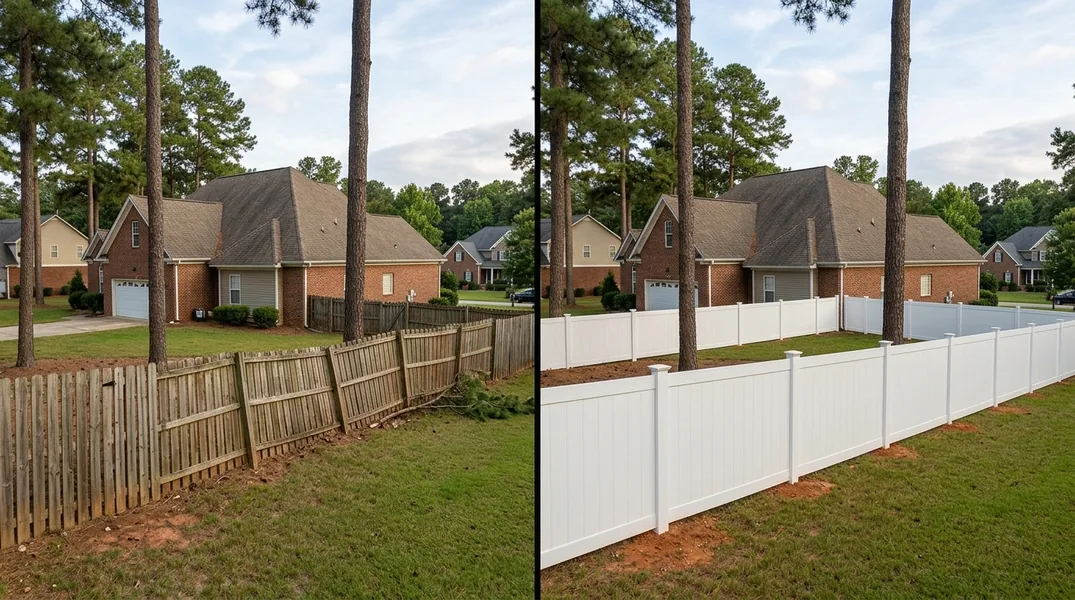
Most leaning fences in Raleigh are a post problem, not a panel problem. The clay soil here swells when it is wet and shrinks when it dries, working a fence post back and forth season after season until it racks out of plumb. At the same time, moisture collects at the ground line, exactly where the post carries the most load, and wood decays there whether it is cedar or pressure-treated pine. A post that has rotted at the base or heaved out of the concrete footing will lean, and the pickets and rails above it may still be sound. That is the decision point: is this fence worth fixing, or is it time to replace it?
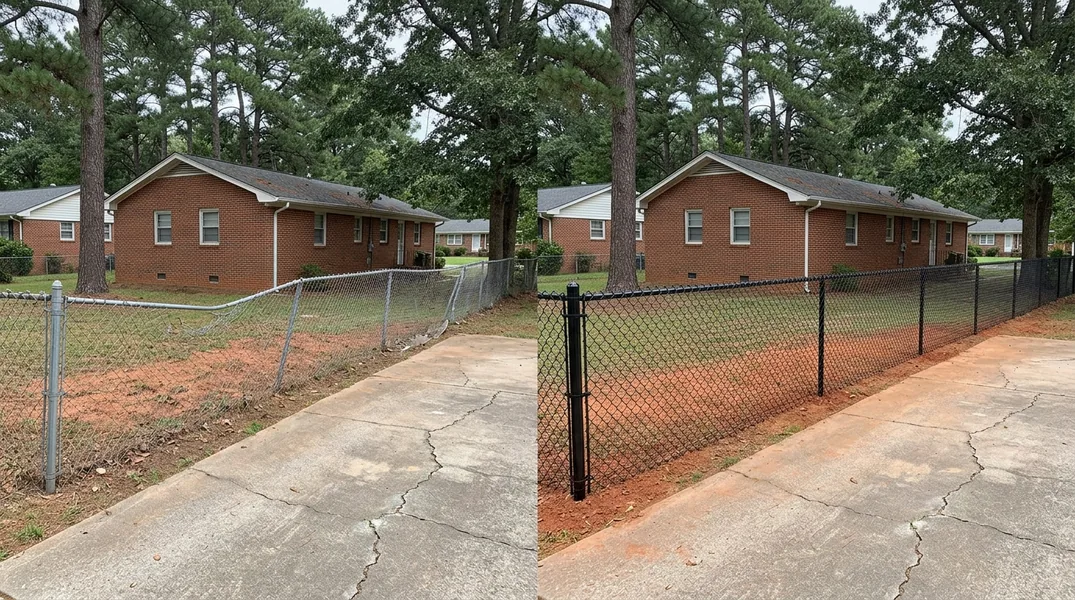
We read a fence line by walking the entire run, not just the section you called about. We test every post, not just the one that moved. We check whether the concrete footing itself has heaved or shifted, or whether the post has failed inside a sound footing. A fence with solid pickets and rails and a handful of failed posts is almost always worth repairing. We reset or replace those posts, set them in concrete below the frost line, and the rest of the fence holds for years. A fence where the posts have gone soft at the ground line along the whole run is at the end of its life, and repairing it section by section will cost more over five years than replacing it once. We quote both options and tell you which one makes sense. On rotted wood: we replace wood that has decayed. The cause is moisture at the ground line. We do not perform termite or pest inspections, apply chemical treatments, or carry out pest control, which is a separate regulated trade in North Carolina. When we remove a rotted post, we are removing the wood that failed. Call (919) 873-3812 to have your fence assessed, or get a free estimate. If Fence Post Repair & Replacement is what you need, we will tell you honestly.
The decision between repair and replacement is not always obvious from the street, and it should not be made in a hurry. A fence that is leaning now but has sound structure is often a candidate for repair, and that repair will cost far less than a full replacement. Conversely, a fence where the damage is widespread is often cheaper to replace than to patch. We have the experience to see which is which, and we present both paths with real numbers so you can decide.
Storm Damage Fence Repair in Raleigh
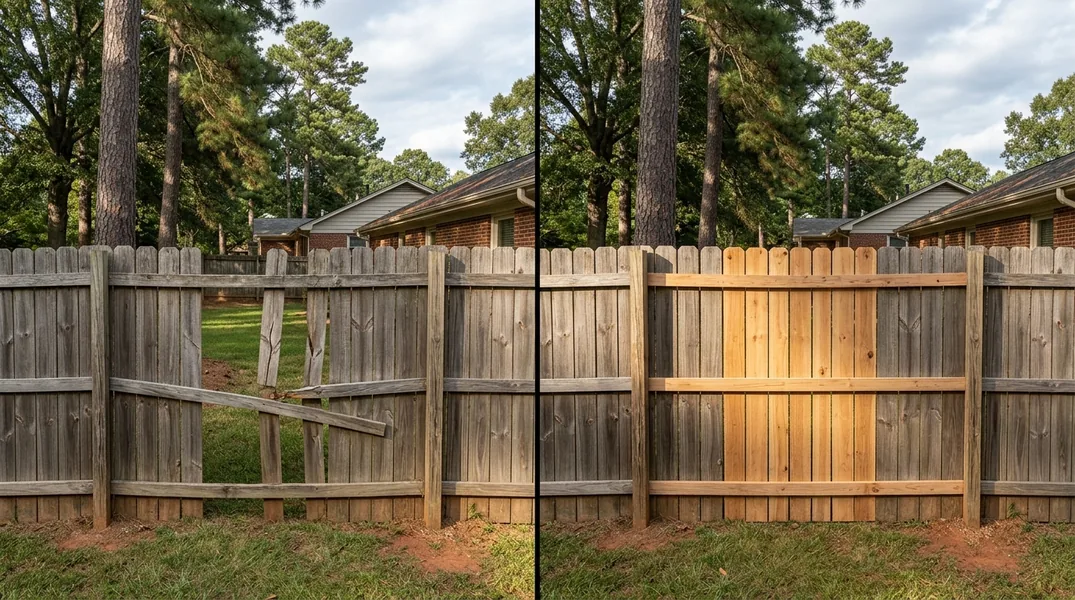
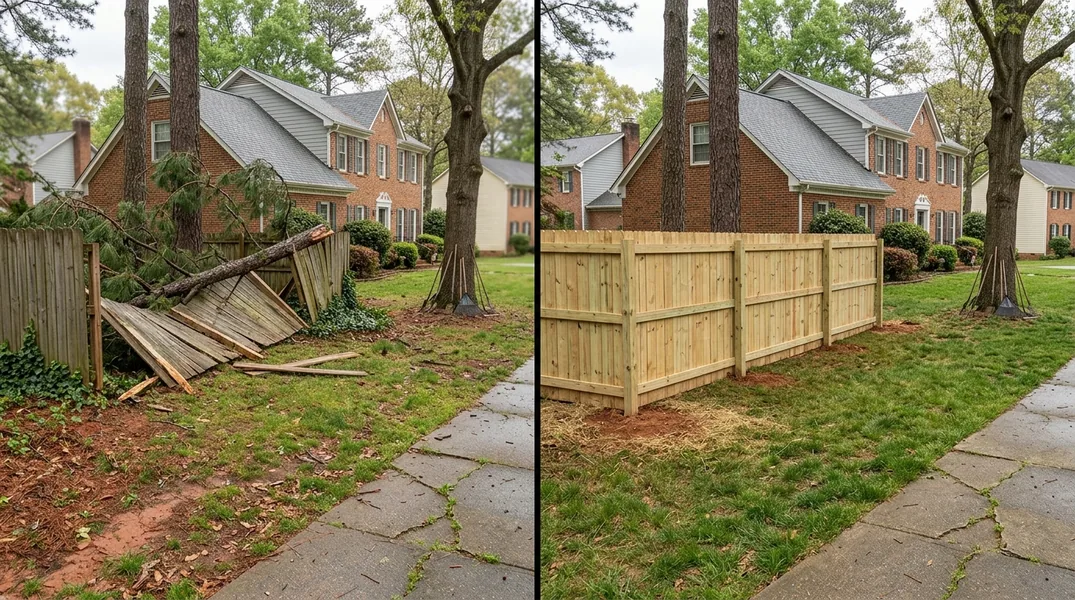
Summer thunderstorms, inland remnants of Atlantic hurricanes, and ice storms all bring down fences in Greater Raleigh. A heavy wind can push an entire run over along the same fence line, snap posts at grade, or tear panels away. When that happens, the fence that comes back should come back better than the one that failed. Posts set deeper, in concrete below the frost line, with proper spacing and bracing, will hold longer than the original. We provide a free damage assessment, photograph the damage section by section, and give you a written estimate. That estimate is yours to provide to your insurance carrier if you choose to file a claim.
What we do not do is promise or imply that your claim will be approved or that any repair will be covered. Insurance coverage decisions rest with your carrier, not with us. We help you document what happened and what it will cost to put it right. If your claim is approved, we will rebuild your fence to a better standard than before. If it is not, you will have an honest estimate and can decide what to do next. For a Storm Damage Fence Repair assessment, call us or contact us online.
Cedar, Pine, Vinyl or Chain Link: Choosing for This Climate
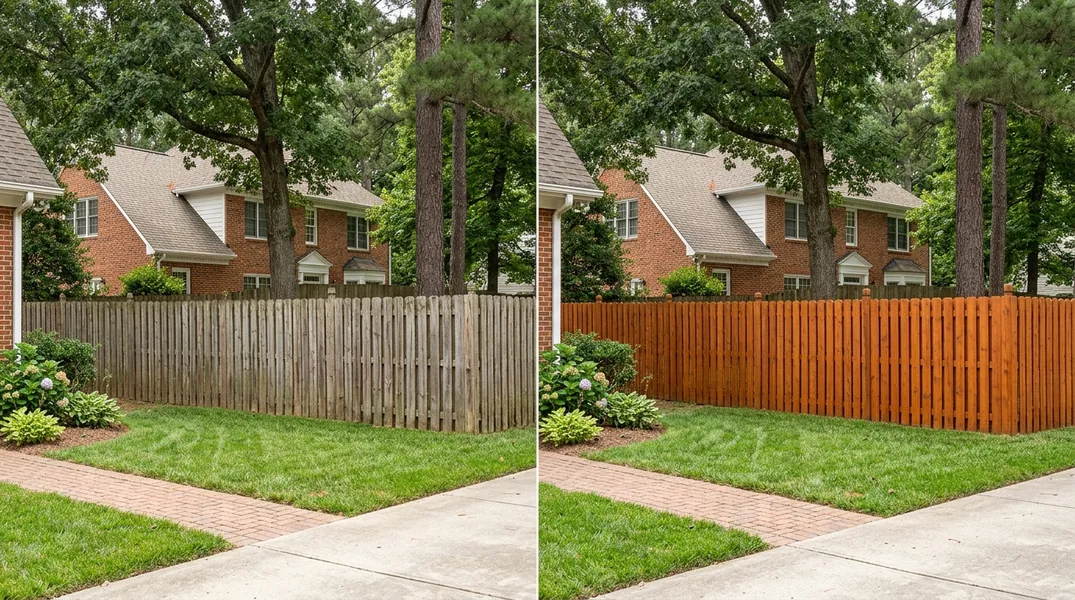
Choosing a fence material for this climate means weighing real trade-offs. Cedar is beautiful and weathers to silver, but under this sun and humidity it needs cleaning and re-staining every two to three years if you want it to last twenty years rather than ten. Pressure-treated pine is the budget choice and holds up well when maintained, though it will not age as gracefully. Vinyl and PVC require almost no maintenance and will not rot, but they are not as rigid as wood in high winds and they cost more upfront. Chain link is the toughest per dollar and comes in galvanized steel (silver, classic) or black powder-coated (cleaner look, slightly more durable). The gauge and mesh size matter: a heavier gauge and tighter mesh cost more but will outlast a lighter fence. Aluminum and ornamental iron are ideal for pool barriers, front-yard fencing, and anywhere you need the fence to rack or step to follow a slope without looking awkward. Each material has a place, and the right choice depends on your budget, your maintenance appetite, and what you want the fence to do.
We quote fencing by the linear foot, and that quote is done on site because slope, existing tear-out, gate openings, and access all change the number. A sloped lot in the Piedmont often calls for a racked installation, where the fence follows the grade smoothly, or a stepped installation, where the panels step down the hill in neat sections. Both are real options, and the choice affects the look and the cost. Visit our pricing page for general guidance, and request a free estimate for your specific property. We can walk you through Wood & Privacy Fence Installation, Vinyl & PVC Fence Installation, Chain Link Fence Installation, or Aluminum & Ornamental Iron Fencing and help you decide.
Permits, HOA Rules, Property Lines & Pool Barriers
Fence permits, height limits, setback rules and material restrictions vary by city and county across Greater Raleigh. In most jurisdictions a permit is required before installation begins, and many cities in the area enforce height limits that are commonly four to six feet for rear and side yards. Requirements vary, so it is worth confirming with your local building department before you start. If your property is in a master-planned community or subject to a homeowners association, the HOA almost certainly has architectural standards that govern fence height, material and color. Architectural approval is usually required before work begins. We recommend checking your deed restrictions and contacting your HOA early in the process. On property lines: we are fence contractors, not land surveyors. We install on the line you identify, working from your existing survey or plat. Determining a property boundary is the regulated work of a licensed land surveyor. Before we start, it is wise to confirm your fence line in writing and, if the fence will be close to a neighbor's property, to discuss the project with them as well.
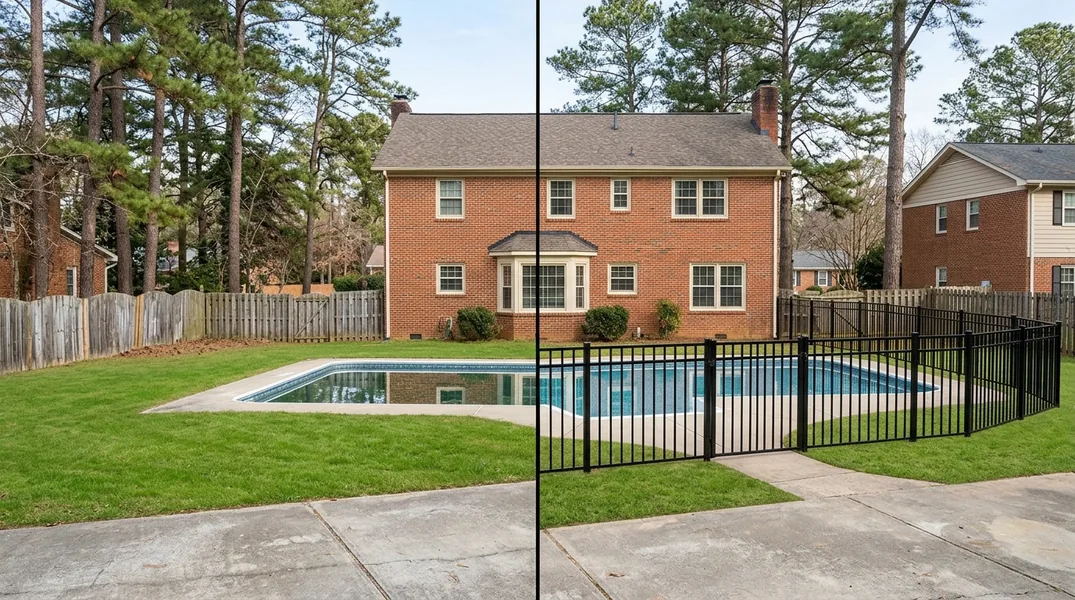
Pool barriers are subject to state law and local code, and requirements are strict. We install pool fencing with self-closing self-latching hardware and other safety features to meet the pool barrier codes that apply at your address. The final determination of compliance rests with your local building official, not with us. We are not certified pool barrier inspectors and do not certify that a barrier meets code. No barrier replaces the need for active supervision of children. On utility locates: setting fence posts is excavation, and we request North Carolina 811 utility locates before we dig any post holes. Locates cover participating operators only and do not mark private lines such as irrigation or landscape lighting, so please tell us about any private utilities on your property. Requirements vary by jurisdiction and by property. Always verify with the Raleigh building department and your HOA before starting your project. Questions about permits, codes or your property? Contact us and we will help you think it through.
Ready to get started? Raleigh Fence Contractors serves in Raleigh and surrounding areas. Book your free on-site estimate today.
Get Your Free Estimate