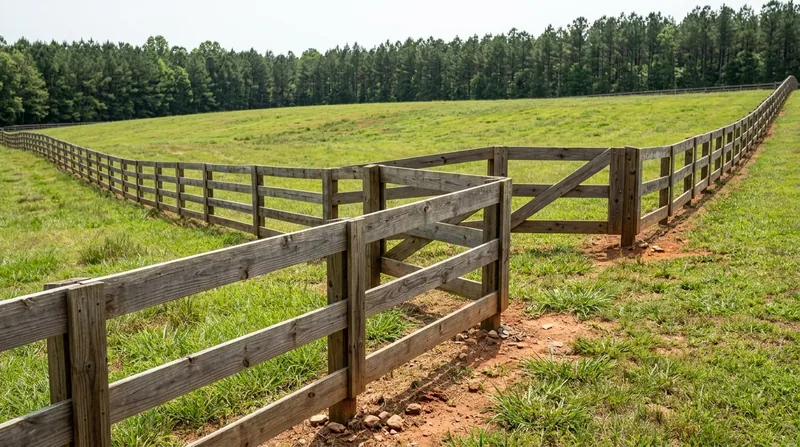




Farm fence installation in Raleigh and the surrounding Piedmont counties demands more than standard residential fencing knowledge. The red clay soil that dominates Johnston, Harnett, Franklin, and Chatham counties holds water after rain, sits wet for weeks, and challenges post longevity at the ground line. Livestock pressure, equipment gates, and the need for reliable containment over acreage require different material choices, post spacing, and installation methods than a backyard privacy fence. We build ranch rail, no-climb horse fence, field wire, and pipe fencing designed to hold up under real farm conditions. Since 2013, we have worked acreage beyond the county line, and we know the terrain, the freeze-thaw cycle, and what holds when a horse leans on it or a tractor needs to get through.
Why Farm and Ranch Fencing Matters on Raleigh-Area Acreage
Acreage in and around Raleigh, Cary, Durham, and the rural counties beyond often mixes active farming, horse operations, and pasture management with property that was never fenced for livestock. A residential fence fails quickly under the weight and pressure of animals. Post spacing, material gauge, and hardware must be sized for the job, not for aesthetics alone. Wet clay soil in winter and spring accelerates wood decay at the ground line, making concrete post setting and pressure-treated or galvanized materials non-negotiable. A failed gate or a section of downed fence can mean lost animals, liability, and costly recovery.
- We set posts in concrete to resist the heave and subsidence of clay soil, not tamped, because tamped posts shift and rot faster in wet Piedmont conditions.
- We space ranch rail and pipe posts at 6 to 8 feet, not the 5-foot intervals common in residential work, to reduce material cost and maintain strength for livestock pressure.
- We use pressure-treated pine or galvanized pipe and hardware to resist the moisture that clay soil holds year-round, especially in winter and early spring.
- We size gates and hardware for the equipment and animals that will use them, with self-closing and self-latching hinges where needed to prevent escape or injury.
- We call for a North Carolina 811 utility locate before any digging, because buried power, gas, and water lines cross rural property boundaries without warning.
The difference between a residential fence and a working farm fence is the difference between a decorative boundary and a containment system that earns its cost over years of reliable use.
Key info: Acreage fencing in Johnston, Harnett, Franklin, and Chatham counties is not subject to most residential HOA rules or city height restrictions, but property deed restrictions and utility easements still apply. We work from your existing survey and install on the line you identify. A licensed land surveyor determines boundary disputes, not a fence contractor.
For more information on fence regulations and permitting in your jurisdiction, visit your local county or city planning office. In Wake County, contact the Wake County Planning and Development Services; in Johnston County, contact the Johnston County Planning Department.
How We Build Farm and Ranch Fencing: From Survey to Gate
A working farm fence starts with a clear understanding of the property line, the animals or equipment the fence must contain, and the terrain it crosses. We walk the acreage with you, identify drainage patterns, slopes, and obstacles, and discuss the best material and post spacing for your livestock or use case. We call for an 811 utility locate to mark buried lines, then set posts in concrete, attach rails or wire with galvanized or powder-coated hardware, and hang gates with hinges and latches sized for the job. The whole process is built on field knowledge, not guesswork.
- We conduct a site walkthrough to understand the terrain, water flow, and the animals or equipment the fence must contain or control.
- We obtain a North Carolina 811 utility locate at no charge to mark buried power, gas, water, and communication lines before post holes are dug.
- We set posts in concrete below the frost line to resist heave and subsidence in clay soil, using pressure-treated pine or galvanized steel as specified.
- We attach rails, boards, or wire with galvanized bolts, brackets, and hardware that resist rust and hold fast under livestock pressure or equipment movement.
- We hang gates on hinges rated for the weight and frequency of use, with self-closing and self-latching hardware where needed to prevent escape.
- We provide a walkthrough and maintenance guidance so you know what to inspect seasonally and when to call for repair.
This approach takes more time than a quick estimate and installation, but it is the difference between a fence that lasts 15 years and one that fails in five.
Example: A 40-acre property in Holly Springs with a mix of pasture and wooded sections needed no-climb horse fence on the perimeter and a sturdy gate for a tractor and hay wagon. We set posts at 8-foot intervals, used pressure-treated 2x4 rails with galvanized bolts, and hung a 10-foot cantilever gate on heavy-duty hinges. The job took three days and cost less than a single lost horse would have.
For details on our other fencing services, including gate installation and repair, visit our service pages.
Farm and Ranch Fencing Methods and Materials
| Approach | Description | Best for |
|---|---|---|
| Ranch Rail | Pressure-treated 2x4 or 2x6 rails bolted to pressure-treated posts, typically 2 to 3 rails high depending on animal type and size. | Horses, cattle, and general pasture containment on acreage; classic appearance and durability in clay soil. |
| No-Climb Horse Fence | Vinyl or galvanized wire mesh attached to pressure-treated or vinyl posts, 4x4 inches or smaller openings to prevent hooves and heads from catching. | Horse operations where safety and visibility are priorities; resists chewing and requires no paint or stain. |
| Field Wire and Pipe | Galvanized or painted steel pipe or tubing bolted to posts, often used with field wire or mesh for livestock containment and equipment control. | Mixed-use acreage where both animals and equipment need containment; strong, low maintenance, and long-lasting in wet soil. |
| Split Rail Fence | Hand-split or milled cedar or pressure-treated rails notched into posts, no nails or bolts, rustic appearance with moderate durability. | Decorative pasture fencing and property boundaries where appearance matters more than containment strength; less suitable for aggressive livestock. |
| Barbed Wire and Field Fence | Galvanized steel wire stretched between posts and fastened with clips or staples, high tensile wire or woven field fence for livestock control. | Cattle and large livestock on extensive acreage; lowest initial cost, requires periodic tensioning and repair, and is not suitable for horses. |
Farm and Ranch Fencing Cost in Raleigh: What to Expect
The cost of farm fence installation depends on material, post spacing, terrain, and the total linear footage you need to fence. Ranch rail and pressure-treated wood fencing on acreage typically starts at around $11 per linear foot, but that figure moves up with slope, rocky soil, gates, and the complexity of the site. Galvanized pipe fencing and no-climb horse fence run higher, often $15 to $25 per linear foot, because the material and labor to set and attach heavier gauge steel take more time. A property that requires racking (stepped installation on a slope) or that crosses wet drainage areas costs more to build and holds its value longer because posts set deeper and stay dry.
The best approach is to get estimates from two or three contractors who will walk the property, understand your livestock and use case, and provide a detailed breakdown of material and labor. We offer a free estimate with no obligation. Call us at (919) 873-3812, and we will schedule a site visit within 24 hours. For a full pricing overview and examples by material type, visit our pricing page.
Factors that increase cost include steep slopes (racked or stepped installation), wet or rocky soil (deeper post holes, harder digging), large gates or cantilever gates for equipment access, and the distance from the road to the work site. A 20-acre pasture with one gate and gentle slopes will cost less per foot than a 5-acre property with multiple gates, steep terrain, and wet drainage areas. We budget for these real-world conditions and do not lowball estimates only to surprise you later.
Farm and Ranch Fencing Near Me: What Raleigh-Area Homeowners Should Know Before Hiring
When you are ready to hire a fence contractor for acreage, look beyond the price quote. Ask whether the contractor will call for an 811 utility locate, set posts in concrete (not tamped), and provide a written warranty or guarantee on their work. Confirm that they understand livestock containment and have experience with the type of animals you keep or plan to keep. If your acreage is in a deed-restricted community or a conservation easement area, ask whether the contractor is familiar with those requirements and will work with your attorney or the easement holder if needed. Check references from other acreage owners in Wake, Johnston, Harnett, Franklin, or Chatham counties, not just residential fence jobs in Raleigh or Cary.
- Ask the contractor whether they are fully insured and whether they call for an 811 utility locate at no charge before digging any post holes.
- Confirm that posts will be set in concrete below the frost line, not tamped, because clay soil in the Piedmont heaves and shifts in winter and spring.
- Request a written estimate that breaks down material, labor, gates, and any site-specific work like slope racking or drainage management.
- Ask for references from acreage owners with similar livestock or use cases, not just residential subdivisions where conditions are different.
- Understand what happens if a gate or section fails within the first year, and whether the contractor backs their work with a warranty or guarantee.
- If your property is subject to deed restrictions, an HOA, or a conservation easement, confirm that the contractor will respect those boundaries and consult with your attorney or easement holder if needed.
A good contractor will take time to understand your land and your needs, will not rush the estimate, and will be honest about what will hold and what will fail under the conditions you face. We are an AFA Member Installer (American Fence Association) and have been in business since 2013. We work on acreage across Raleigh, Cary, Durham, Apex, Wake Forest, Holly Springs, Fuquay-Varina, Garner, and the rural counties beyond. Call us at (919) 873-3812 for a free estimate, or visit our contact page to request an appointment.
Farm & Ranch Fencing in Raleigh: Pricing Guide
| Service | Price | Details |
|---|---|---|
| Ranch Rail Fencing | Starting at $11/ft | Pressure-treated 2x4 or 2x6 rails, posts set in concrete, includes basic site access and standard terrain |
| No-Climb Horse Fence | Starting at $15/ft | Vinyl or galvanized mesh, pressure-treated posts, includes hardware and installation on level to gently sloped ground |
| Field Wire and Pipe Fencing | Starting at $18/ft | Galvanized steel pipe or tubing with field wire, heavy-duty hinges, labor for concrete post setting and tensioning |
| Split Rail Fence | Starting at $13/ft | Cedar or pressure-treated split rails, notched posts, includes standard installation on level to gently sloped terrain |
| Steep Slopes or Complex Terrain | On estimate | Racked or stepped installation, wet drainage areas, rocky soil, or multiple gates require site assessment before pricing |
| Estimate and Travel | Free | No-obligation site visit and estimate within 24 hours, travel included in Raleigh and surrounding counties |
Indicative pricing, the exact cost depends on square footage, finish, and site access. Free personalized estimate within 24h at (919) 873-3812.


