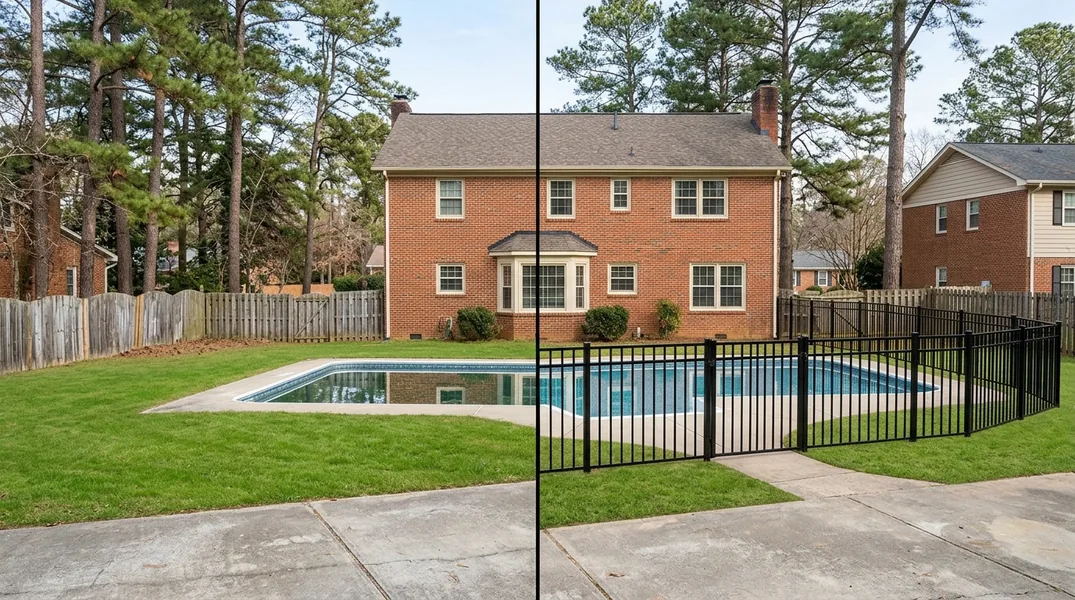
Why Pine Roots Make Fencing Challenging in the Triangle
If you own property in Raleigh or the surrounding Triangle area, you've likely encountered the challenge of working around mature pine trees. Pine trees are common throughout North Carolina, and their root systems present a real obstacle when homeowners want to install a new fence. Unlike deciduous trees with deeper tap roots, pines develop shallow, spreading root networks that extend far beyond the drip line of the canopy. These roots sit just beneath the soil surface, making it nearly impossible to dig fence post holes without hitting them.
The problem becomes even more complex when you're trying to run a fence line directly through or very close to pine trees. You can't simply cut through the roots without damaging the tree, and you can't avoid the roots without either relocating your fence line or choosing a different installation approach. This is why so many homeowners in Raleigh struggle with fence planning when trees are involved. Understanding your options before you start digging is essential to avoiding costly mistakes and protecting both your trees and your investment.
Assessing Your Fence Line: When to Work Around vs. Relocate
Before you commit to any fencing solution, take time to carefully map out where the pine roots actually are. Walk the perimeter of your property and identify the tree locations, then trace where you want your fence to run. In many cases, you'll have more flexibility than you initially think. If your ideal fence line is only slightly affected by roots, you might be able to shift the fence line just a few feet without compromising your property layout or privacy goals. This simple adjustment can eliminate the root problem entirely and save you thousands in specialized labor and materials.
However, if relocating the fence line isn't practical (perhaps due to property lines, existing structures, or your specific privacy needs), you'll need to work directly with the roots. This is where professional assessment becomes valuable. A contractor experienced with Wood & Privacy Fence Installation can evaluate the depth and spread of roots, determine which ones are critical to tree health, and recommend the best installation method. Some roots can be carefully worked around or even gently moved aside during installation, while others must be left completely untouched. Getting this evaluation right at the planning stage prevents delays and damage later.
Proven Methods for Installing Fence Posts Around Pine Roots
When you're committed to your fence line and pine roots are in the way, several practical methods can work. The most common approach is hand digging and careful root management. Instead of using a power auger, which can damage roots indiscriminately, experienced contractors hand dig post holes, carefully moving roots aside as they go. This method takes more time and labor, but it preserves tree health and allows you to work around obstacles. Once the hole is deep enough and the roots are positioned safely, the post can be set in concrete. This technique works particularly well for Wood & Privacy Fence Installation projects where you need deep, stable posts anyway.
Another option is adjusting your post spacing slightly. Standard fence posts are typically set 6 to 8 feet apart, but you can sometimes shift a post location by a foot or two to avoid a major root. This small adjustment often makes the difference between a smooth installation and a complicated one. You might also consider using helical piers or concrete footings that sit on top of the ground rather than being dug deep into it, though this approach works best with certain fence styles and may affect the overall appearance. The key is working with a contractor who understands tree biology and has experience finding creative solutions specific to your property's conditions.
Material Choices for Root-Heavy Areas
The type of fencing material you choose can actually influence how manageable the root situation becomes. Wood & Privacy Fence Installation remains popular in the Triangle region because wood is flexible and forgiving during installation. Wood posts can be positioned to work around roots, and the material itself is easier to hand dig around. However, wood requires more maintenance over time and will eventually need replacement, especially in areas where moisture and root pressure are constant factors.
Vinyl & PVC Fence Installation offers another alternative. Vinyl posts don't rot and require minimal maintenance, but they're less flexible during installation. Vinyl typically requires deeper, more stable footings, which can make working around shallow pine roots more challenging. Aluminum & Ornamental Iron Fencing and Chain Link Fence Installation are also options, though they're less common in areas with significant root obstacles. Discuss material options with your contractor based on your specific root situation, maintenance preferences, and budget.
Wood & Privacy Fence Installation Cost in Raleigh: What to Budget
Installing a fence around pine roots will cost more than a standard installation on clear ground. You should expect to pay extra for hand labor, specialized equipment, and potentially additional materials needed to work safely around roots. The exact increase depends on how extensive the root system is and how much of your fence line is affected. A short section near one tree might add 10 to 15 percent to your total cost, while a fence that runs parallel to several mature pines could increase costs by 25 to 50 percent or more. Getting a detailed free estimate that accounts for root challenges is the only way to know what you'll actually pay.
When comparing pricing from different contractors, make sure they're accounting for the same scope of work. A low bid that ignores root complications will likely result in change orders and delays once digging begins. Choose a contractor who has inspected your property, understands the root situation, and has provided a detailed breakdown of labor and materials. This approach protects you from surprises and ensures you're getting a fair price for the specialized work required. Raleigh Fence Contractors can assess your specific situation and provide transparent pricing that reflects the actual complexity of your project.
Protecting Tree Health While Installing Your Fence
One critical consideration throughout this entire process is tree health. You want a fence that lasts for decades, but you also want your pine trees to thrive. Cutting or severely damaging roots can stress or even kill a tree, and a dead tree can eventually become a liability. Before any work begins, have a certified arborist assess which roots are essential to tree stability and health. Some roots can be carefully worked around or even pruned without harm, while others should never be disturbed. This professional input protects your investment in both your fence and your landscape.
During installation, minimize soil compaction around the tree base and avoid running heavy equipment directly over root zones. After your fence is installed, monitor the tree for signs of stress like yellowing needles, branch dieback, or reduced growth. If problems develop, contact a local arborist immediately. Most trees are resilient, especially mature pines, but proactive care gives them the best chance to recover from the disturbance of fence installation. When you work with experienced contractors who understand these concerns, you protect both your property and your landscape investment.
Getting Professional Help: When to Call a Raleigh Fence Contractor
If you're facing a fence project complicated by pine roots, professional guidance is worth the investment. Trying to install fence posts yourself around significant root systems often leads to damaged trees, unstable posts, and wasted time and materials. A contractor with experience in the Triangle's landscape can assess your situation quickly, recommend the best approach for your specific property, and execute the work efficiently. They have the right tools, know how to work safely around roots, and understand local soil and tree conditions that affect installation success.
Raleigh Fence Contractors specializes in navigating exactly these kinds of challenges. Whether you need Wood & Privacy Fence Installation or another fence style, our team has the experience to work with your landscape rather than against it. We'll evaluate your property, discuss options that work for both your fence and your trees, and provide a clear estimate before any work begins. If you're ready to move forward with your project, call us at (919) 873-3812 or request a free estimate online. Let's find the solution that works for your Raleigh property.
Looking for a professional tree service in Raleigh? Raleigh Fence Contractors responds fast for all your fence needs.
Get a Free Quote