Understanding North Carolina Pool Barrier Code
If you own a swimming pool in Raleigh, you're not just responsible for maintaining clean water and balanced chemicals. State and local regulations require you to install proper barriers around your pool to prevent accidental drowning, particularly among young children. North Carolina's pool barrier code is designed to create a complete enclosure that makes it difficult for unsupervised access to occur.
The pool barrier code in North Carolina is based on guidelines from the American Society of Testing and Materials (ASTM F1346) and incorporates recommendations from the Consumer Product Safety Commission. These standards exist because drowning is a leading cause of unintentional injury death for children ages 1 to 4. By understanding and complying with these requirements, you're not only meeting legal obligations but also protecting your family, guests, and neighbors from tragedy.
Most jurisdictions in the Raleigh area require that pools be completely enclosed by a fence, wall, or other approved barrier. This means the barrier must surround the entire pool on all sides, with no gaps or openings that would allow a child to slip through. The specific dimensions and materials can vary, but the intent is always the same: creating a reliable, consistent obstacle between the pool and unsupervised access.
Pool Fence Height Requirements in North Carolina
One of the most critical specifications for pool fences in North Carolina is height. The standard requirement is that your pool fence must be at least 4 feet tall, measured from the ground level on the outside of the fence. This height is measured vertically from the lowest point of the ground adjacent to the fence, not from an elevated deck or patio. If your pool area has sloping terrain, you'll need to measure from the lowest point where someone could potentially stand.
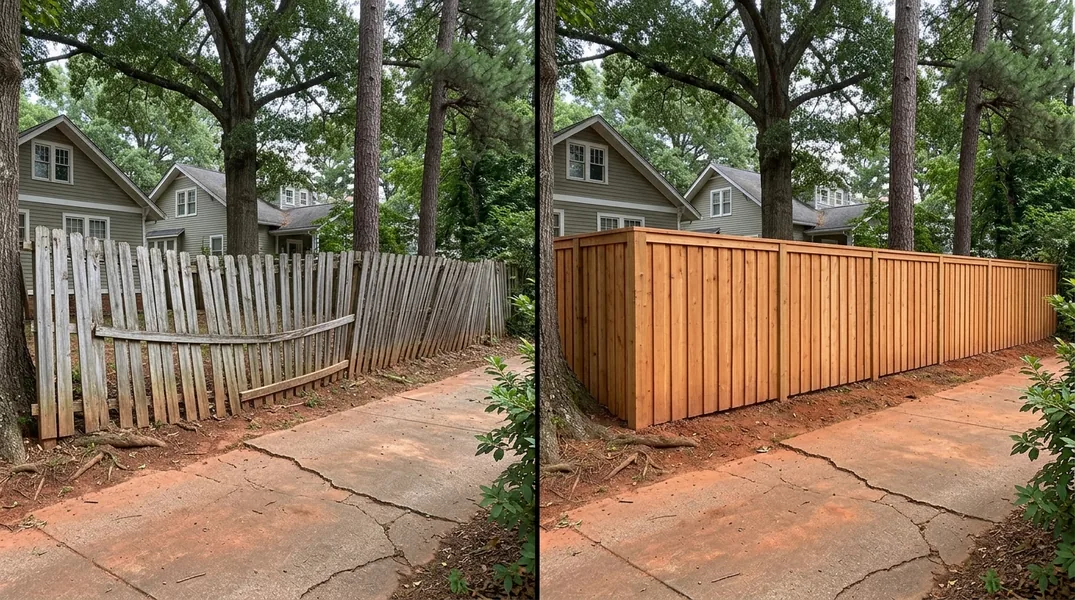
The 4-foot minimum height creates a barrier that is difficult for small children to climb over or jump over accidentally. However, height alone isn't enough. The fence must also be constructed in a way that prevents climbing. This is why Wood & Privacy Fence Installation is a popular choice for pool enclosures in Raleigh and surrounding areas. Solid wood fencing provides a smooth exterior surface without horizontal rails or handholds that would make climbing easier for children.
Some homeowners wonder if a 4-foot fence is truly sufficient. While it meets code requirements, remember that this height is designed as part of a comprehensive safety system that includes self-closing gates, proper latching mechanisms, and removal of pool toys or flotation devices that might encourage a child to approach the fence. The height requirement works best when combined with these other safety measures.
Gap and Opening Requirements for Pool Enclosures
Beyond height, North Carolina's pool barrier code is very specific about gaps and openings in the fence. The most important rule is the four-inch sphere rule: no opening in the fence should be large enough to allow a sphere 4 inches in diameter to pass through. This measurement is critical because it's based on the size of a child's head. If a 4-inch sphere can fit through an opening, a child's head could potentially fit through as well, creating a serious hazard.
This gap requirement applies to the space between vertical fence boards, between the fence and the ground, and around any decorative elements or hardware. If you have an older fence with warped or separated boards, or if boards have shrunk over time creating larger gaps, your fence may no longer meet code requirements. Similarly, the space between the bottom of the fence and the ground should be no more than 4 inches. If grass or soil erosion has created a gap, you'll need to address it to maintain compliance.
Gates present a particular challenge when it comes to gaps. The gate frame must fit snugly within the opening, and the gate itself should close tightly against the frame. Chain Link Fence Installation requires special attention to gap requirements since the mesh openings are inherently larger. Chain link fencing for pools often requires additional barriers or modifications to ensure it meets the four-inch sphere requirement. This is one reason why many pool owners in Raleigh prefer solid fencing options for pool enclosures.
Self-Closing and Self-Latching Gate Requirements
Perhaps the most frequently cited requirement in North Carolina's pool barrier code is the self-closing pool gate. Every gate providing access to the pool area must be equipped with a self-closing mechanism that automatically closes the gate after someone passes through. This is not optional. The gate must close on its own without requiring someone to manually push it shut. The logic is straightforward: a gate left open is an open invitation to accidental access, and a self-closing mechanism removes human error from the equation.
In addition to self-closing, the gate must also be self-latching. A self-latching gate means the latch engages automatically when the gate closes, without requiring manual action. The latch should be positioned at least 54 inches above the bottom of the gate, measured on the side of the gate that faces away from the pool. This height ensures that young children cannot easily reach and operate the latch. The self closing pool gate must be able to close completely within 15 seconds, and the latch must engage with at least 1/2 inch of positive engagement.
Many homeowners ask whether they can install a regular gate and simply remember to keep it closed. The answer is no. North Carolina code specifically requires the automatic closing and latching mechanism because it accounts for human forgetfulness. Whether you're installing a new pool fence or upgrading an existing one, ensuring your gate meets these requirements is non-negotiable. If you're uncertain whether your current gate meets code, it's wise to have a professional inspect it or install a compliant gate system.
Compliance and Inspection in Raleigh
Before you install or modify a pool fence in Raleigh, it's important to understand your local permitting process. Most jurisdictions require a permit for pool fence installation or modification. The permit process ensures that your fence will be inspected by a qualified official to verify that it meets all applicable codes. Skipping the permit process might seem like a shortcut, but it can result in fines, forced removal of non-compliant fencing, or liability issues if an accident occurs.
When you hire a professional fence contractor to install your pool fence, they should be familiar with all current code requirements and should handle the permitting process for you. Raleigh Fence Contractors has extensive experience installing pool-compliant fencing throughout Raleigh, and our team understands the specific requirements that local inspectors will be checking for. We ensure that every pool fence we install meets or exceeds code requirements, so you can have confidence that your installation will pass inspection.
After your fence is installed and inspected, your responsibilities don't end. You should periodically inspect your fence for damage, separation of boards, rust, or any other issues that might compromise the barrier. If you notice gaps developing, loose boards, or problems with your gate's closing mechanism, address them promptly. Regular maintenance ensures that your pool barrier continues to provide the protection it was designed to offer.
Choosing the Right Fencing Material for Your Pool
When selecting fencing material for your pool enclosure, you have several options, each with different advantages and considerations for meeting code requirements. Wood & Privacy Fence Installation remains a popular choice because solid wood provides an attractive appearance, excellent gap control, and a surface that's difficult to climb. Wood fencing also allows for customization in terms of height, style, and finishing options. However, wood requires regular maintenance, including staining or sealing, to withstand North Carolina's humid climate and protect against rot and insect damage.
Vinyl & PVC Fence Installation offers a low-maintenance alternative that resists weathering, rot, and insect damage. Vinyl fencing can be designed to meet all pool barrier code requirements, including proper height and gap specifications. The material is durable and requires minimal maintenance beyond occasional cleaning. For homeowners who prefer not to deal with regular staining or sealing, vinyl can be an excellent choice for pool enclosures.
Aluminum & Ornamental Iron Fencing can also be used for pool enclosures, though special attention must be paid to spacing between vertical elements to ensure compliance with the four-inch sphere rule. Aluminum fencing is lightweight, durable, and requires minimal maintenance, making it another viable option for many homeowners. Regardless of which material you choose, the key is ensuring that your final installation meets all North Carolina pool barrier code requirements.
If you're ready to install a compliant pool fence or upgrade your existing barrier, contact Raleigh Fence Contractors for a free estimate. We can discuss your options, review code requirements, and help you select the best fencing solution for your pool. Call us at (919) 873-3812 to get started.
Looking for a professional tree service in Raleigh? Raleigh Fence Contractors responds fast for all your fence needs.
Get a Free Quote