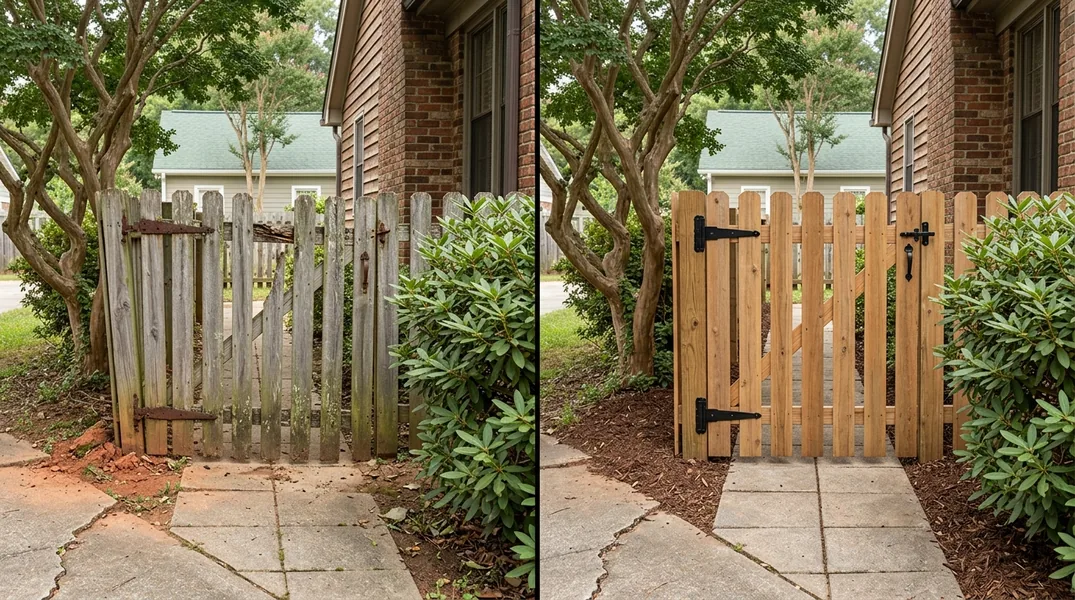
Understanding Piedmont Red Clay and Fence Post Challenges
If you own property in Raleigh, you're familiar with the distinctive reddish soil that defines our region. This Piedmont red clay presents unique challenges for fence installation that many homeowners don't anticipate until problems arise. Unlike sandy or loamy soils that drain predictably, red clay is dense, compacts tightly, and holds moisture for extended periods. These characteristics directly affect how fence posts settle and perform over time.
The primary issue with fence post clay soil is that while it initially feels solid and stable, it undergoes significant movement. During wet seasons, clay absorbs water and expands. When dry conditions return, it shrinks and pulls away from the post. This constant cycling creates voids around the post base, leading to movement and instability. A post that felt rock-solid on installation day may become a loose fence post within months if not properly secured using the right technique. This is precisely why the collar method has become essential for quality Wood & Privacy Fence Installation throughout Raleigh.
What Is a Fence Post Collar and Why It Matters
A fence post collar is a simple but highly effective device placed at ground level around the base of a fence post. Typically made from PVC, rubber, or composite materials, the collar sits just above the soil surface and extends several inches into the ground. Its primary function is to act as a seal and stabilizer, preventing soil movement from affecting the post itself. When installed correctly, a collar creates a stable transition zone that resists the expansion and contraction of clay soil.
The collar works by two mechanisms. First, it physically restricts lateral movement of the soil around the post base. Second, it helps manage water drainage and moisture accumulation at the critical post-to-soil interface. Many homeowners assume that simply setting fence posts in concrete is sufficient, but concrete alone doesn't address the underlying problem of clay soil movement. A post set in concrete without a collar can still develop a loose fence post condition because the concrete itself can crack and shift as the clay beneath it moves. The collar provides an additional layer of protection that keeps the post vertical and secure even as seasonal changes occur in the soil around it.
Setting Fence Posts in Concrete: The Foundation Method
When you're setting fence posts in concrete, you're creating a permanent anchor that resists pulling and tipping forces. The concrete method is the gold standard for fence installation because it distributes the post's weight across a larger area and creates friction that prevents vertical movement. However, the concrete alone is only part of the solution, especially in Piedmont clay. The depth of the concrete foundation matters significantly. Most professionals recommend digging post holes at least 24 to 30 inches deep for residential fences, with concrete extending 6 to 12 inches above ground level depending on post height and wind load expectations.
The collar becomes even more important when setting fence posts in concrete because it bridges the gap between the concrete foundation and the surrounding soil. As the clay soil moves seasonally, the collar absorbs and redirects that movement, preventing it from transferring directly to the concrete bond. Without the collar, you might see the concrete footprint crack or heave, which eventually compromises the post stability. Professional fence contractors in Raleigh understand that combining proper concrete depth with a quality collar system delivers the most durable results. This dual approach ensures that your fence investment lasts decades rather than requiring repairs or replacement within five to ten years.
How to Identify and Fix a Loose Fence Post
A loose fence post is easy to spot if you know what to look for. Stand next to a fence panel and gently push on it near the top. If the post moves noticeably or if you hear creaking, you have a problem that needs attention. You might also notice the fence panels pulling away from the posts, gaps appearing between boards, or the overall fence line looking wavy or uneven. These signs indicate that the post has lost its grip in the soil and is no longer providing stable support. In clay soil, this typically happens because the soil has shrunk away from the post, creating voids that allow movement.
Fixing a loose fence post requires either re-setting it or reinforcing it with additional support. If the post is still structurally sound but loose, you can sometimes improve stability by adding a collar and re-compacting the soil around it, though this is often a temporary solution. A more permanent fix involves removing the post, digging deeper if necessary, installing a new collar system, and resetting the post in fresh concrete. If the post itself is rotted or damaged, replacement is the only option. This is why preventive installation with a collar from the start is far more cost-effective than dealing with repairs later. If you're seeing loose fence posts on your property, contacting a professional is your best move. Raleigh Fence Contractors can assess the situation and recommend the right solution. Call us at (919) 873-3812 or request a free estimate today.
Professional Installation Techniques for Clay Soil Success
Professional fence contractors who work regularly in clay soil have refined their techniques to maximize post longevity. The standard approach begins with proper hole digging. Rather than simply augering a hole straight down, experienced installers often widen the hole slightly at the bottom to create a bell shape. This increases the concrete's contact area with undisturbed soil below, providing greater resistance to heave and movement. The post itself is positioned in the center of the hole, and the collar is installed at ground level before concrete is poured. The concrete is then worked around the post and collar, ensuring no air pockets remain.
Another critical technique involves soil preparation. Before the post and concrete go in, professionals remove the loose, disturbed clay from the hole and compact the bottom with undisturbed clay or a base layer of gravel. This creates a more stable foundation that resists seasonal movement. Some contractors also recommend backfilling around the concrete with a mixture of soil and gravel rather than pure clay, which improves drainage and reduces moisture accumulation. These details might seem minor, but they make the difference between a fence that needs repair in five years and one that remains solid for twenty. If you're planning a new fence project in Raleigh, choosing a contractor who understands these nuances is essential to protecting your investment.
Choosing the Right Contractor for Your Raleigh Fence Installation
Not all fence contractors have the same level of experience with Piedmont clay soil. Some use basic installation methods that work fine in other regions but fail in our local conditions. When you're evaluating contractors for your project, ask specifically about their approach to post setting in clay soil. Do they use collars? What depth do they dig? How do they handle the concrete foundation? A contractor who can explain these details confidently and provide examples of long-standing fences they've installed is more likely to deliver quality results. Ask for references from local customers whose fences have been in place for several years.
Raleigh Fence Contractors brings decades of local experience to every project. We understand the specific challenges of installing fences in our region, and we use proven techniques that account for clay soil behavior. Whether you're interested in Wood & Privacy Fence Installation, Vinyl & PVC Fence Installation, Chain Link Fence Installation, or Aluminum & Ornamental Iron Fencing, we apply the same commitment to proper post installation that keeps your fence stable and attractive for years to come. Contact us at (919) 873-3812 or visit our website to request a free estimate. Let's build a fence that truly lasts.
Looking for a professional tree service in Raleigh? Raleigh Fence Contractors responds fast for all your fence needs.
Get a Free Quote