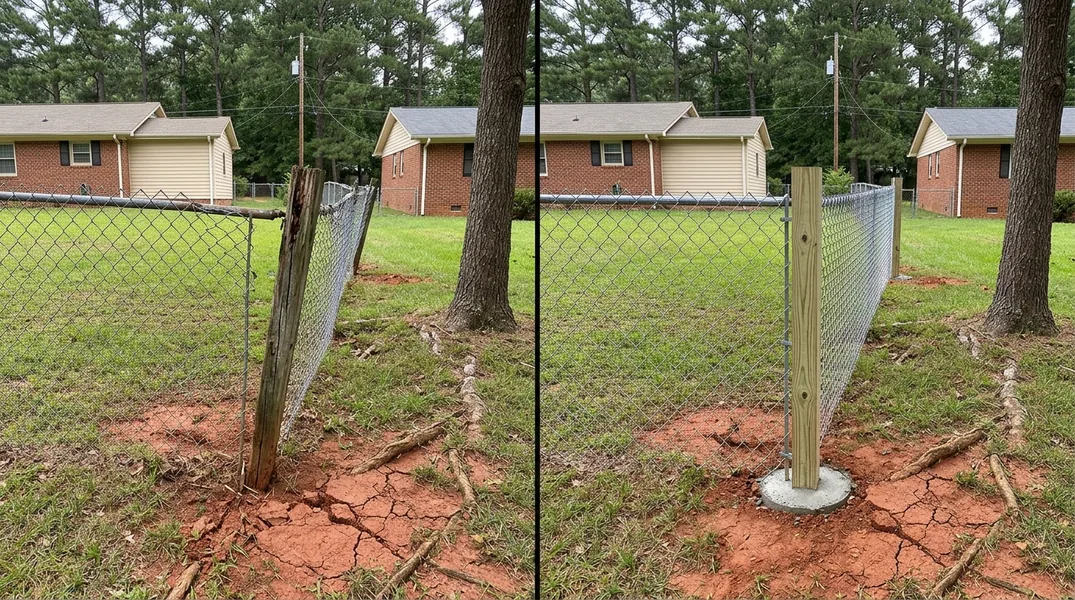
The Raleigh Problem: Why Local Fences Lean and Fail
If you own a home in Raleigh, you've probably noticed a leaning fence at some point, either on your own property or your neighbor's. It's one of the most common fence problems in the Triangle region, and it's not just poor installation or neglect. The truth is that Raleigh's unique soil composition, climate, and local vegetation create a perfect storm for fence damage. Understanding the root causes of your leaning fence is the first step toward fixing it and preventing future problems.
A leaning fence is more than an eyesore. It signals structural failure that will only worsen over time. Left unchecked, a leaning fence can collapse entirely, creating safety hazards for your family and liability issues for your property. The good news is that most leaning fence problems are preventable and treatable when caught early. Whether you need Wood & Privacy Fence Installation expertise or simple repairs, understanding what causes the lean is essential to making the right decision.
Red Clay and Soil Instability: The Foundation Problem
One of the primary culprits behind leaning fences in Raleigh is the region's notorious red clay soil. This clay-heavy earth expands when wet and shrinks when dry, creating constant movement beneath your fence posts. During heavy rains or the humid summers common in North Carolina, the clay absorbs water and swells. When dry spells arrive, the soil contracts, leaving gaps and shifting the ground around your fence posts. Over multiple seasons, this expansion and contraction cycle weakens the foundation that holds your fence upright.
The problem becomes even more pronounced when fence posts are not set deeply enough or when they're installed without proper drainage considerations. If a post sits in clay that remains perpetually moist, the soil pressure can literally push the post sideways. Additionally, the red clay's density makes it difficult for water to drain properly, which means standing water around post bases accelerates rot and decay. This is why proper post depth and concrete installation are critical in Raleigh. Posts should extend well below the frost line and be set in concrete that slopes away from the post to shed water.
Pine Roots and Tree Interference: Nature's Assault on Your Fence
The pine trees that dot so many Raleigh properties create another major source of fence problems. Pine roots are aggressive, spreading far beyond the tree's canopy in search of water and nutrients. When a fence line runs near or through a wooded area, or even close to a pine tree in an adjacent yard, those roots can find their way under and around your fence posts. As the roots grow thicker over time, they physically lift and push the fence posts out of alignment, causing the distinctive lean that homeowners know all too well.
Beyond root damage, overhanging branches from pines and other trees deposit needles, sap, and moisture directly onto your fence. This constant moisture promotes mold, mildew, and accelerates wood rot, especially in Wood & Privacy Fence Installation projects. The shade cast by large trees also prevents proper drying of the fence surface, creating an ideal environment for decay. If you have trees near your fence line, regular trimming and monitoring are essential preventive measures. When roots have already compromised your posts, professional fence post replacement may be your only solution.
Rotted Posts: The Silent Killer of Fence Stability
Even if your fence posts were installed perfectly and your soil is stable, wood rot remains one of the most dangerous threats to fence longevity in the Southeast. The warm, humid climate of Raleigh creates ideal conditions for fungal growth and wood decay. Posts that sit in soil, especially in clay soil that retains moisture, are particularly vulnerable. Once rot begins at the base of a post, it spreads upward, weakening the structural integrity. A rotted post cannot support the weight and wind pressure that a fence experiences, leading to the characteristic lean as the compromised post begins to buckle or shift.
The challenge with rotted posts is that the damage often begins underground, where you can't see it. By the time a fence starts to lean visibly, the rot may have progressed significantly. This is why fence post repair and fence post replacement are common services in the area. Pressure-treated lumber offers some protection, but even treated wood has a limited lifespan in harsh conditions. Regular inspection of your fence, particularly around the base of posts, can help you catch rot early. If you notice soft spots, discoloration, or a spongy texture near the ground line, contact a professional immediately to assess whether repair or replacement is necessary.
Leaning Fence Repair vs. Full Fence Post Replacement: Making the Right Choice
When you notice your fence leaning, your first question is likely whether it can be repaired or if you need to replace it entirely. The answer depends on several factors: how severe the lean is, how many posts are affected, whether the problem is rot or soil movement, and the age of your fence overall. A slight lean caused by soil settling might be corrected by adjusting the post or adding bracing. However, if the post is rotted or if multiple posts are compromised, fence post replacement is usually the only lasting solution.
Attempting to straighten a fence by force without addressing the underlying cause typically fails. The fence will lean again once the pressure is removed. This is why professional assessment is so important. Raleigh Fence Contractors can evaluate your specific situation and recommend whether fence post repair, fence post replacement, or a complete fence restoration makes sense for your property. Sometimes, addressing the underlying cause, such as improving drainage or removing interfering tree roots, can prevent future problems even if some posts need replacement. Get a free estimate to understand your options and the scope of work needed.
Prevention and Long-Term Fence Maintenance in Raleigh
The best defense against leaning fences is prevention and regular maintenance. If you're planning new Wood & Privacy Fence Installation, ensure posts are set at least 30 inches deep in concrete, with the concrete sloping away from the post for drainage. Choose pressure-treated lumber rated for ground contact, and consider applying a wood sealant every few years to protect against moisture and rot. If you have trees near your fence line, keep branches trimmed back and monitor the area for root intrusion.
For existing fences, inspect them at least twice a year, especially after heavy rains or storms. Look for signs of leaning, soft spots at the base of posts, or loose boards. Address small problems immediately before they become major structural failures. If you notice any concerning changes, don't wait. Contact Raleigh Fence Contractors at (919) 873-3812 to discuss your fence's condition and what steps might prevent costly damage down the road. A small repair today can save you from replacing an entire fence section tomorrow.
Looking for a professional tree service in Raleigh? Raleigh Fence Contractors responds fast for all your fence needs.
Get a Free Quote